From Chance...
to Consistency.
The first and only FDA-approved oral liquid desmopressin indicated to treat central diabetes insipidus (CDI) in patients of all ages
Splitting tablets can make it difficult to get the prescribed dose, and other desmopressin formulations, such as nasal sprays and injections, may come with challenges for everyday use.
Limitations of use: DESMODA is not approved to treat nephrogenic diabetes insipidus.
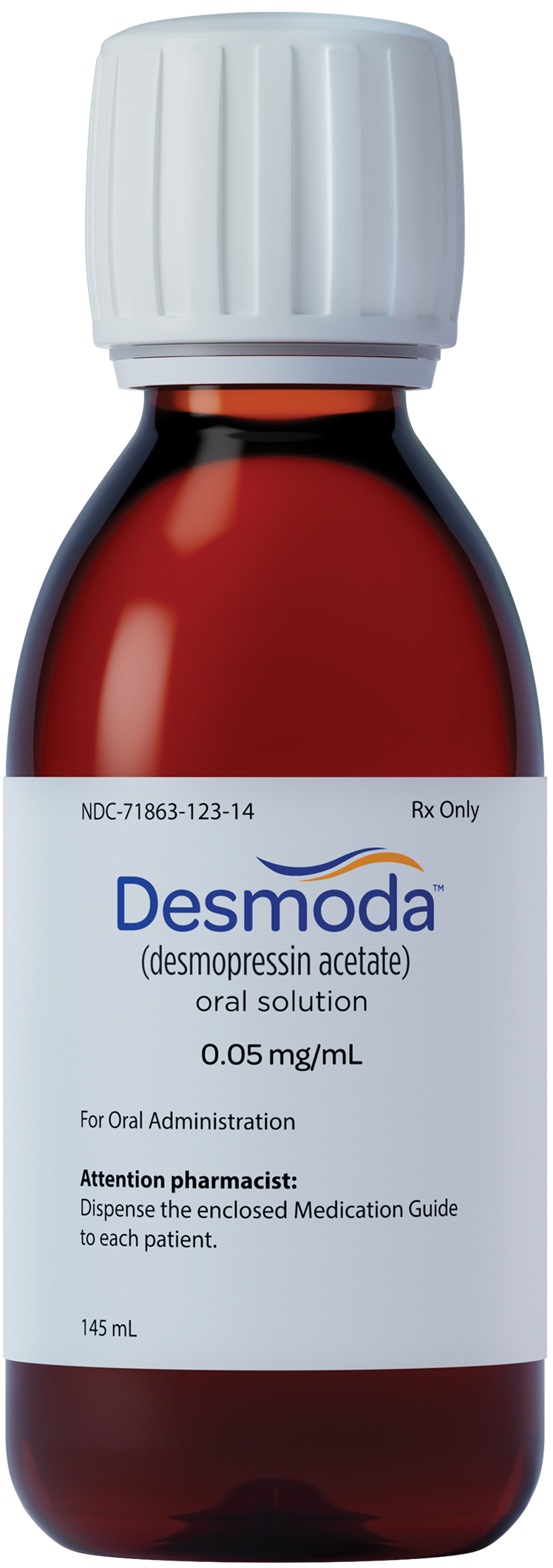

Splitting tablets can make it difficult to get the prescribed dose, and other desmopressin formulations, such as nasal sprays and injections, may come with challenges for everyday use.
Limitations of use: DESMODA is not approved to treat nephrogenic diabetes insipidus.

DESMODA helps bring clarity to your daily dosing routine
Central diabetes insipidus (CDI) is also known as arginine vasopressin deficiency (AVP-D). Recently, “AVP-D” has been used because it reflects a better understanding of the hormone involved and avoids confusion with diabetes mellitus.
Living with CDI can be challenging. Getting the right dose of desmopressin for you or your child is important. Precise desmopressin dosing can help control symptoms and lower the risk of side effects.
Now you can stop hoping the dose is right—DESMODA can help you feel confident that it is.

DESMODA is the first and only FDA-approved ready-to-use* oral liquid desmopressin for the treatment of CDI, also known as AVP-D, across all ages
Limitations of use: DESMODA is not approved to treat nephrogenic diabetes insipidus.
*See Prescribing Information.

DESMODA helps support precise dosing in a liquid form, designed to fit into your daily routine and help provide confidence in getting the right dose
DESMODA helps allow doses to be measured accurately and adjusted as needed over time
For adults and caregivers of children with CDI, DESMODA is an oral liquid formulation, which is designed to help provide:
Precision
Helps allow accurate measurement for individualized, prescribed dosing
Flexibility
Helps avoid reliance on tablet splitting, crushing, or other dosing modifications
Consistency
Helps support a measured dose designed to be repeatable
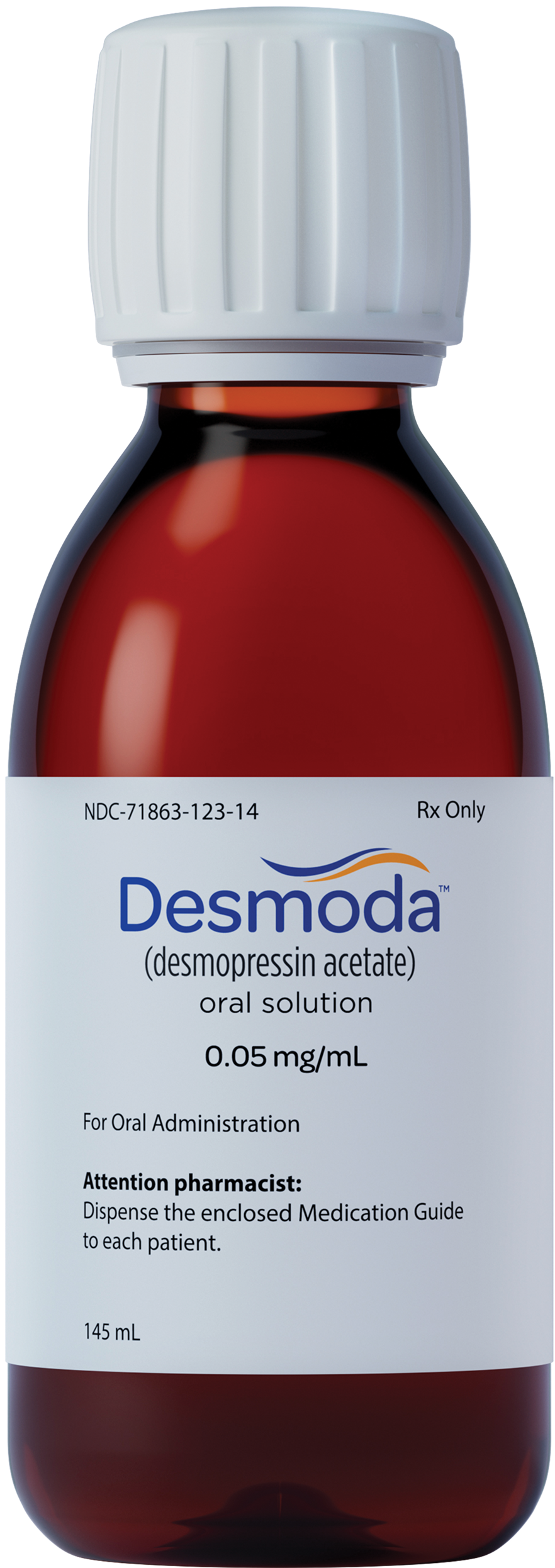
DESMODA's liquid formulation is designed to support dosing consistency as part of its daily use. Ask your doctor if DESMODA is right for you or your child.
Learn about CDI and the challenges with current treatments
Discover how DESMODA is different
Learn how to take DESMODA
Find helpful resources
USE AND IMPORTANT SAFETY INFORMATION
USE
DESMODA (desmopressin acetate) oral solution is a prescription medicine used to treat central diabetes insipidus (CDI) in adults and children.
Limitations of Use
Do not use DESMODA for the treatment of nephrogenic diabetes insipidus.
Who should NOT take DESMODA?
Do not take DESMODA if you:
- Have or have ever had low blood sodium levels (hyponatremia)
- Are allergic to desmopressin or any of the ingredients in DESMODA
- Have moderate to severe reduction in kidney function (creatinine clearance less than 50 mL/min)
IMPORTANT SAFETY INFORMATION
DESMODA can cause low blood sodium levels (hyponatremia), which can be serious and may be life-threatening.
Drinking too much fluid while taking DESMODA can lead to water intoxication and dangerously low sodium levels.
Symptoms of low blood sodium may include: headache, nausea or vomiting, weight gain, tiredness or weakness, confusion, muscle cramps or spasms. Severe symptoms may include seizures, coma, or trouble breathing. Your healthcare provider may recommend limiting how much fluid you drink and may monitor your blood sodium levels during treatment.
Children and older adults may be at higher risk of developing low sodium levels.
DESMODA may cause your body to hold onto (retain) fluid. Tell your healthcare provider if you have heart failure, high blood pressure, or swelling.
Serious allergic reactions, including fatal anaphylaxis, have occurred with desmopressin products. Stop taking DESMODA and seek emergency medical help if you develop symptoms such as trouble breathing, swelling of the face or throat, or severe rash.
DESMODA contains benzoic acid, which could potentially be harmful to low-birth-weight and preterm infants. Use in these patients requires careful monitoring and fluid restriction.
What are the possible side effects of DESMODA?
Other common side effects include GI upset, swelling, high blood pressure, nervous system disorders, and abnormal thinking.
Drug interactions
Tell your healthcare provider about all medicines you take. Some medicines may increase the risk of low sodium levels when taken with DESMODA, including certain antidepressants, pain medicines, NSAIDs, and seizure medicines. DESMODA can cause increased blood pressure. Talk to your doctor if you take other medicine that can raise blood pressure.
Please visit DESMODA.com for more information.
You are encouraged to report negative side effects of prescription drugs by contacting Eton Pharmaceuticals, Inc. at 1-855-224-0233 or the U.S. Food and Drug Administration (FDA) at https://www.fda.gov/safety/medwatch or call 1-800-FDA-1088.
Please see full Prescribing Information for more information.
USE AND IMPORTANT SAFETY INFORMATION
USE
DESMODA (desmopressin acetate) oral solution is a prescription medicine used to treat central diabetes insipidus (CDI) in adults and children.
Limitations of Use
Do not use DESMODA for the treatment of nephrogenic diabetes insipidus.
Who should NOT take DESMODA?
Do not take DESMODA if you:
- Have or have ever had low blood sodium levels (hyponatremia)
- Are allergic to desmopressin or any of the ingredients in DESMODA
- Have moderate to severe reduction in kidney function (creatinine clearance less than 50 mL/min)
IMPORTANT SAFETY INFORMATION
DESMODA can cause low blood sodium levels (hyponatremia), which can be serious and may be life-threatening.
Drinking too much fluid while taking DESMODA can lead to water intoxication and dangerously low sodium levels.
Symptoms of low blood sodium may include: headache, nausea or vomiting, weight gain, tiredness or weakness, confusion, muscle cramps or spasms. Severe symptoms may include seizures, coma, or trouble breathing. Your healthcare provider may recommend limiting how much fluid you drink and may monitor your blood sodium levels during treatment.
Children and older adults may be at higher risk of developing low sodium levels.
DESMODA may cause your body to hold onto (retain) fluid. Tell your healthcare provider if you have heart failure, high blood pressure, or swelling.
Serious allergic reactions, including fatal anaphylaxis, have occurred with desmopressin products. Stop taking DESMODA and seek emergency medical help if you develop symptoms such as trouble breathing, swelling of the face or throat, or severe rash.
DESMODA contains benzoic acid, which could potentially be harmful to low-birth-weight and preterm infants. Use in these patients requires careful monitoring and fluid restriction.
What are the possible side effects of DESMODA?
Other common side effects include GI upset, swelling, high blood pressure, nervous system disorders, and abnormal thinking.
Drug interactions
Tell your healthcare provider about all medicines you take. Some medicines may increase the risk of low sodium levels when taken with DESMODA, including certain antidepressants, pain medicines, NSAIDs, and seizure medicines. DESMODA can cause increased blood pressure. Talk to your doctor if you take other medicine that can raise blood pressure.
Please visit DESMODA.com for more information.
You are encouraged to report negative side effects of prescription drugs by contacting Eton Pharmaceuticals, Inc. at 1-855-224-0233 or the U.S. Food and Drug Administration (FDA) at https://www.fda.gov/safety/medwatch or call 1-800-FDA-1088.
Please see full Prescribing Information for more information.